Hammarbacken Museum Garden
On this page you can read about the Museum Garden, the history of gardens in Fiskars, circular household management and gardening as a hobby. We will also highlight issues related to climate change and biodiversity and provide tips on how to incorporate sustainability into your garden. We add content as the garden develops.
The history of the Garden Area
At Fiskars Ironworks, the workers have historically cultivated their own garden plots diligently, especially growing nutritious and filling crops such as potatoes, spinach, and cabbage. Both the museum building and the Slaggbyggnaden building served entirely or partially as residential houses from the early 1900s until the 1970s, and the garden’s slope was therefore actively used for cultivation and keeping animals. Gardening was also carried out extensively around the manor house, Stenhuset, for which in 1823, the first greenhouses and orangeries were built in the garden.
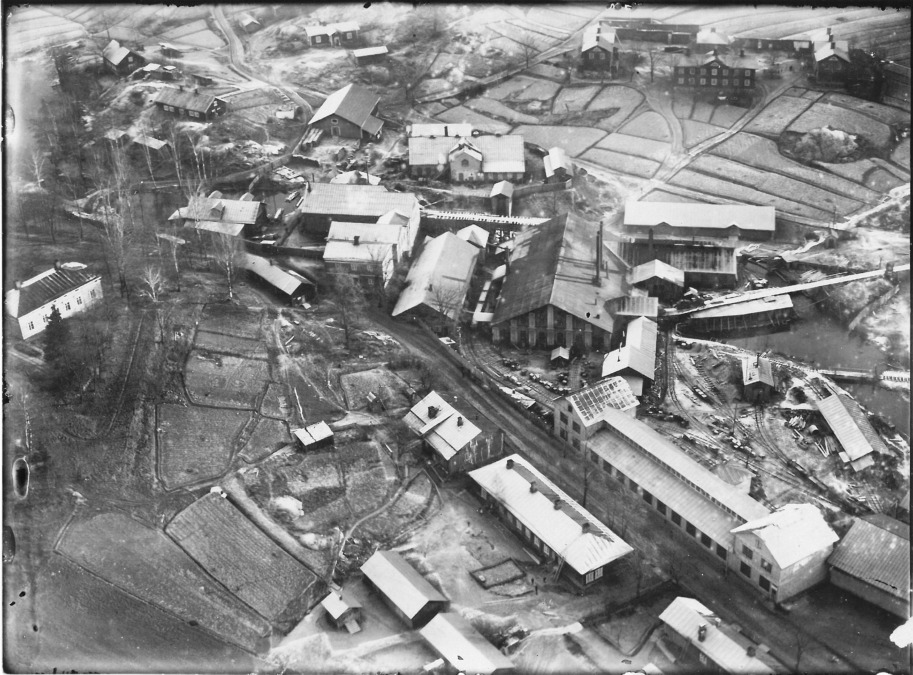
Gardening and Farming in Fiskars
Growing vegetables and herbs was an important part of the self-sufficient economy of manors and ironworks. In the 19th century, these plants were grown around the ironworks office and Kivimuuri.
Read more about Gardening and Farming in FiskarsKitchen garden, Miniforest and a hayfield
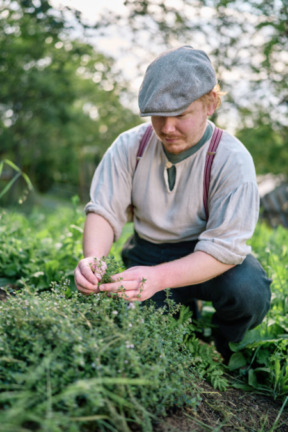
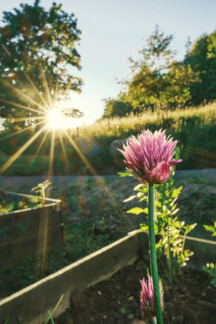
On the slope above the Slaggbyggnaden building lies the most recently established part of the museum’s garden — namely the kitchen garden and the forest garden,
Read more about Kitchen garden, Miniforest and a hayfieldFiskars Villagers’ love for gardening
In 2018, the museum’s garden volunteer project was launched, and thanks to it, the area around the Slagbyggnaden building has been spruced up and gained several new flower beds.
Read more about Fiskars Villagers’ love for gardeningComposting and soil building – a circular approach to gardening
We use several different types of composts here in the museum garden. The largest one is located here down in the slope and is used for garden waste that accumulates during the growing season.
Read more about Composting and soil building – a circular approach to gardeningDead hedge – a contribution to biodiversity
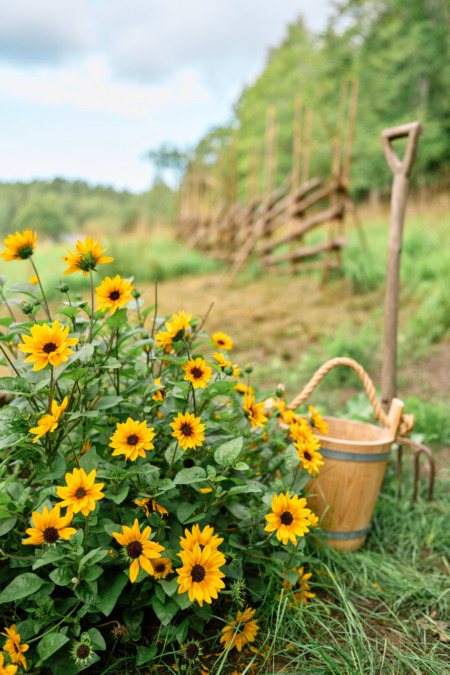
In the museum’s garden, we have chosen to set up a few dead hedges. Here, they mainly serve purposes other than acting as an actual fence.
Read more about Dead hedge – a contribution to biodiversityCan i visit the Museum Garden?
Yes, you can visit the garden from May to September. The admission is free. If you are interested in gardenin, but dont have your own plot, you can become a Museum garden volunteer.
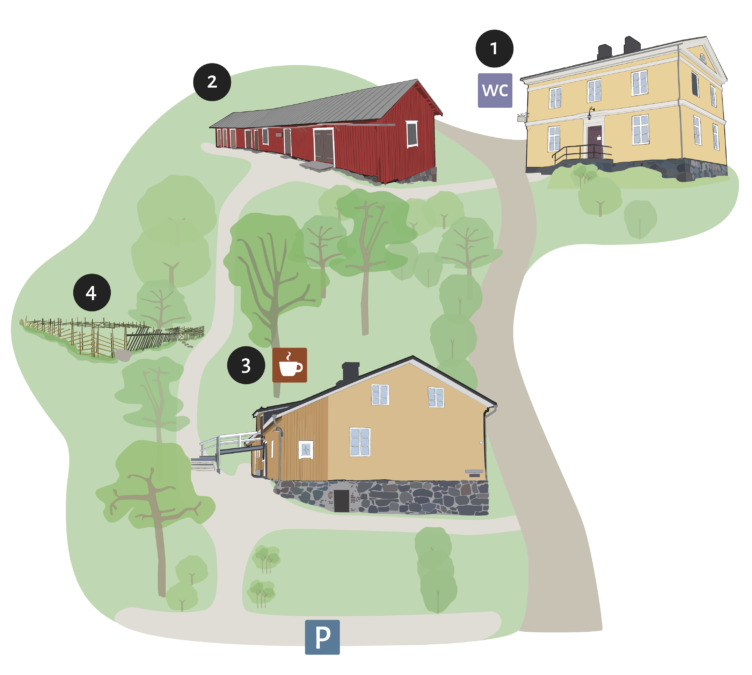
The area between the Slaggbyggnaden building and the museum’s outbuilding on the Museum area now forms the Hammarbacken Museum Garden (no 4. on the map). You reach the garden along the walkway that goes through the museum area. The garden has gradually been developed as part of the Fiskars Museum’s activities, featuring both traditional cultivated plants, a kitchen garden for educational purposes, and sheep pastures.