Gardening and Farming in Fiskars
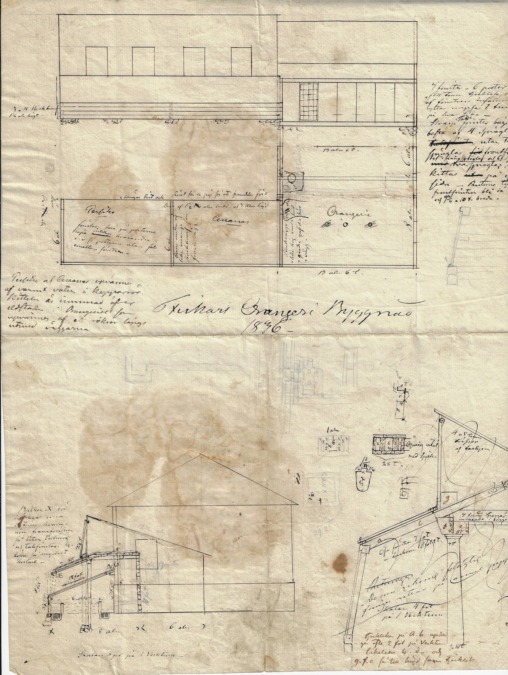
Growing vegetables and herbs was an important part of the self-sufficient economy of manors and ironworks. In the 19th century, these plants were grown around the ironworks office and Kivimuuri. First greenhouses were built above Kivimuuri as early as 1823, right next to the vegetable gardens. Greenhouses were very popular in the 18th century Europe, from where they spread to Finland. Their popularity persisted until the 20th century. Greenhouses added to the variety of grown plants, because they made it possible to grow plants which otherwise could not withstand winter, such as fruits.

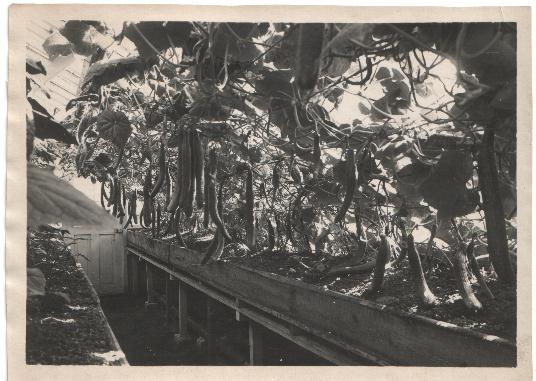
Peas, cauliflower, celery, spinach, pumpkins, melons and herbs were among the plants grown in the gardens of Fiskars. The people of the Ironworks could also enjoy the exotic orange and peach trees, and beautiful flowers.

The gardens brought an important addition to the workers’ diet. Their yield was so good that hunger wasn’t an issue at the Ironworks despite the many wars. In the 1930’s, the production exceeded demand at the Ironworks. In addition to their economic value, gardens were also status markers, and people were eager to show them off. Beautiful environment was both a source of pride to the people, and a sign of the enlightenment and wealth of the Ironworks.
The Company’s Apple Orchard, Asparagus, and Tobacco Cultivation
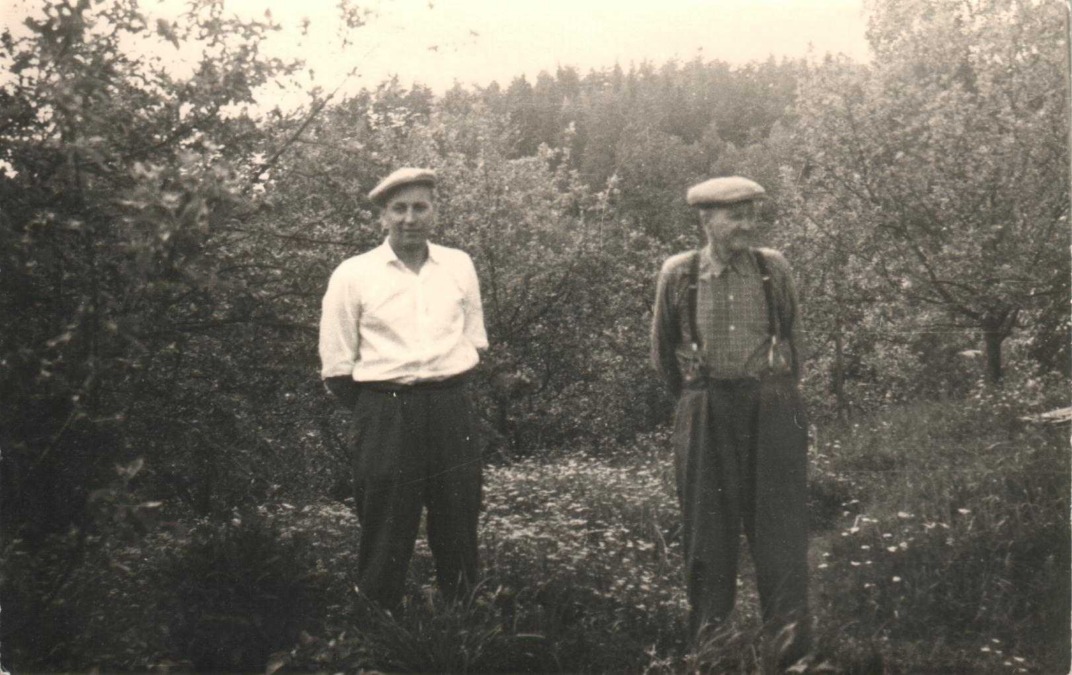
After the war, the Fiskars company established an apple orchard with hundreds of apple trees in Albacka, Gästerby. Land specially cultivated in this way did not need to be colonized. The cowherd Malmberg guarded the orchard together with his dog, Mister. Today, the old apple storage building next to the orchard has been converted into a residence.
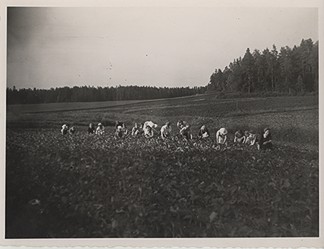
During and after the war, asparagus was also grown in fields at Rissla. At first, the plantations covered ½ hectare and were profitable, but when they were expanded to 1 hectare, they became unprofitable due to the amount of labor required. In the display case, there is an asparagus knife manufactured in Fiskars.
In the 1940s, Virginia tobacco and rubber dandelion were also cultivated in the fields of Fiskars. The tobacco plantations covered 22 ares and produced good yields. Rubber dandelion was used as a “rubber substitute” during the war years.
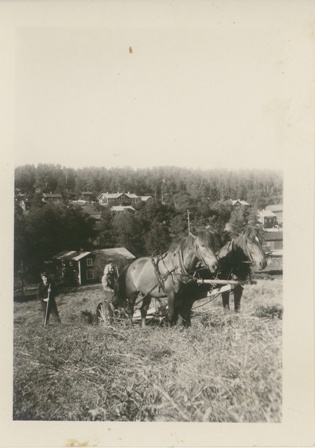
The Gardener’s House
Next to the gardens was a gardener’s house. The gardener took care of the plans, and also of the surveillance of the gardens. That meant that the house had to be situated so that one could see the entire garden from it. Tools were kept in the house, such as a still and a fruit squeezer. There also had to be room for drying and preserving plants. Gardener was a respected position, and reserved only for men. He was expected to be honest, dependable, trustworthy, patient and careful. Gardener’s helpers were usually women.
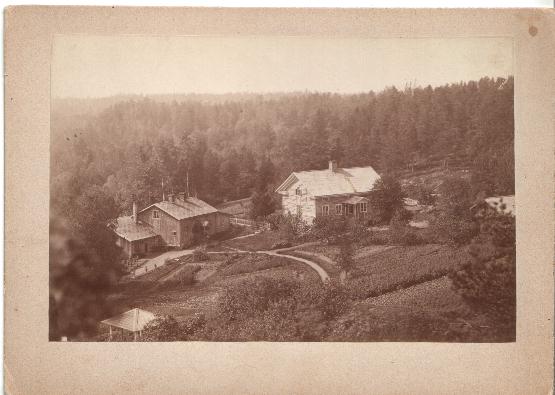
The Workers’ Own Plots
The workers at Fiskars were diligent in maintaining their plots, because their salaries were not high. Their crops, however, were considerably different from those of the gentry. They cultivated crops rich with nourishments, such as potatoes, spinach and cabbages. To prepare for winter, food was stored in small cellars nearby.
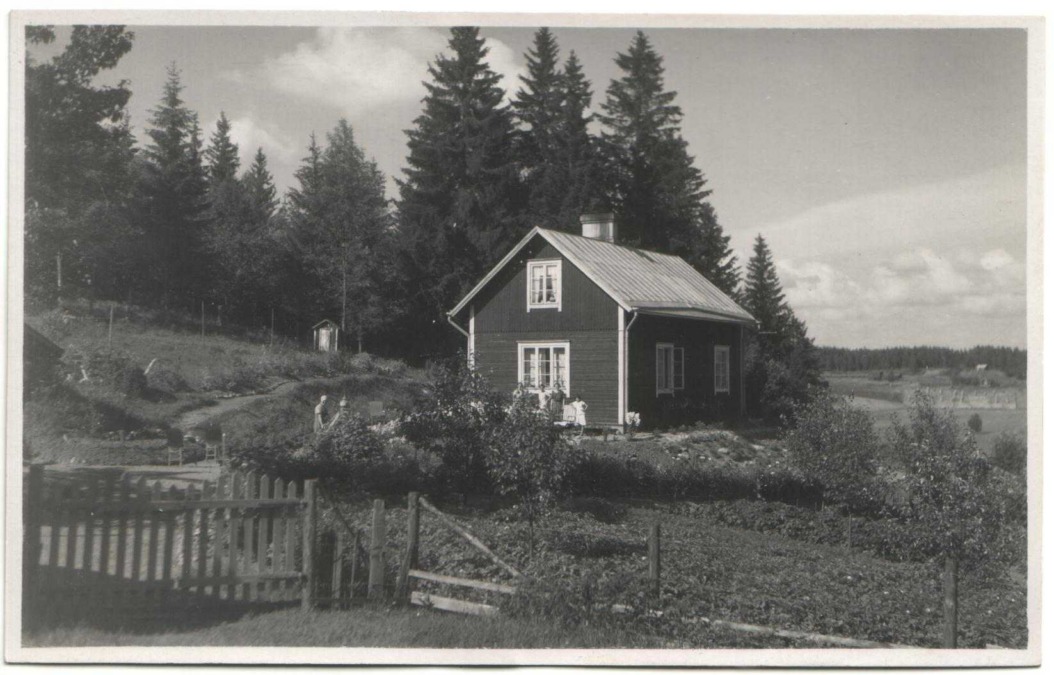

In the 19th century the riverside below the red houses along Peltorivi was covered with the villagers’ plots. The name of the street, Peltorivi (Fieldrow), probably comes from this. The hill above Slaggbyggnaden also used to be fields of potatos and vegetable gardens.
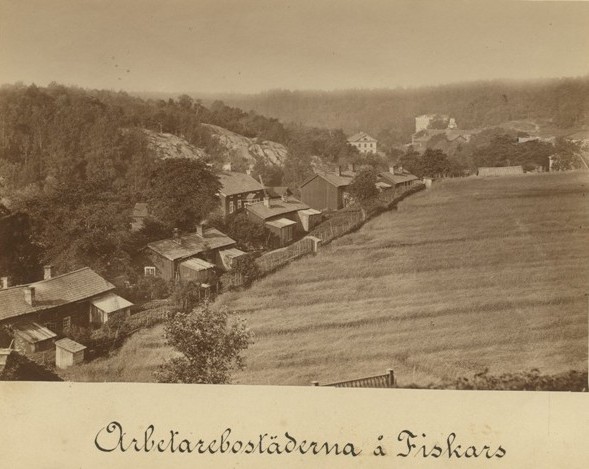
The Corps de Logi “Stenhuset” Park
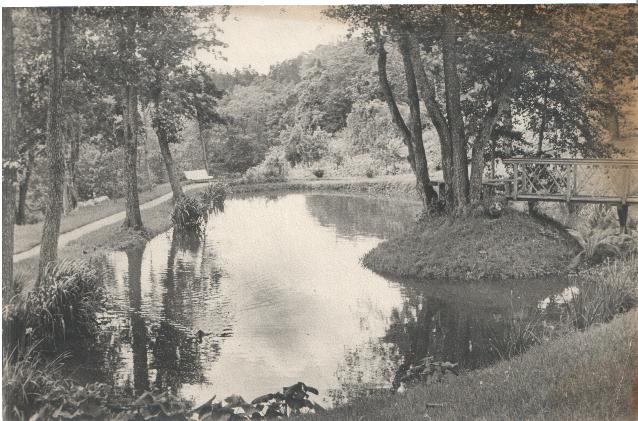
Besides vegetable gardens and such, Fiskars also had a park meant for recreation and fun. It was built in the English style with winding paths and abundant plantings. Despite their abundance, every detail was carefully considered. The Kivimuuri Park was used by both the gentry and the workers. At nights the young courted in the park.
A Pioneer in Farming
In addition to gardens, the people of Fiskars also worked in farming. The Ironworks had its own farming department, which still today is part of the company. Many of the reforms in Fiskars farming were due to Johan Jacob von Julin. In 1836, crop rotation was implemented. Foreign ploughs were also tried. These were the base for the famous Fiskars ploughs, which were made at the end of the 19th century to correspond to Finnish conditions. Other tools for farming and gardening were also researched and manufactured at Fiskars workshops, such as shovels, hoes, different knives and gardening scissors. Von Julin also paid attention to animal husbandry. In 1830’s, regular test milkings were carried out, and this improved milk production. To enhance animal husbandry, von Julin came up with a system of awards. In an annual competition at the beginning of May, the best bulls, milking cows, draught oxen and breeding bulls were awarded with money and silver items. At the same time, new tools were introduced. In the 1940’s, Fiskars was at the forefront of development of farming, and had ditching and irrigation. Its fields at the time were 552 hectares, and were whitewashed annually.
The last cows descended from the original ayshires bought by Julin, were taken from Fiskars in the 1970’s. At the same time, vegetable gardening slowed down on Fiskars land. Nowadays, however, gardening is again flourishing in the yards and plots of Fiskars villagers. Even though the research and manufacture of ploughs in Fiskars stopped in the 1970’s because of the mechanising of farming, most of the tools Fiskars makes today, are for gardening.
Sources:
Albert Netts minnen (rakt avskrivet från På minnenas landsväg II)
Carlson, C.E. Fiskars 350. 1999, Keuruu.
Ernsten, Svante. Fiskars – det kända bruket.
Fiskars 1649. 350 år Finsk industrihistoria.
Lindqvist, Yrsa. Mat, måltid, minne. Hundra år av finlandssvensk matkultur. SLS. 2009, Helsingfors.
Matvejew, Irina. Kotiseutumme Fiskars. Selostus Fiskarsin ruukista ja museosta. 1981, Tammisaari.
Unpublished sources:
Fiskars museum Collections, Såpnejlikan-exhibition in 2006